Morning : 10:30 AM To 03:00 PM | Evening : 05:00 PM To 09:00 PM

Our Facilities

Lingual Orthodontic

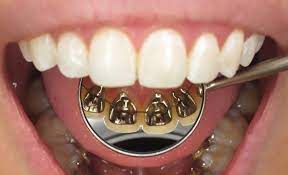
Lingual orthodontics, commonly referred to as incognito or invisible braces, is a specialised area of orthodontics that focuses on employing braces that are affixed to the inner surface of the teeth, facing the tongue, to align and correct teeth. For people who want to straighten their teeth covertly, lingual braces are a more aesthetically acceptable option than conventional braces because they are practically undetectable from the front of the teeth.

Fixed Orthodontics Metal, Ceramic

A type of orthodontic therapy called fixed orthodontics, commonly referred to as traditional braces, involves fastening brackets and wires to the teeth in order to gradually move them into the correct positions. Metal and ceramic brackets are the two most popular types of materials used in fixed orthodontics. Both metal and ceramic brackets function similarly by securing the archwire to the teeth, which presses on the teeth to direct their movement. To gradually realign the teeth over time, the orthodontist periodically adjusts the archwire. To improve the effectiveness of the treatment, elastic bands or other auxiliary elements may be employed in addition to the brackets and wires.

Invisalign Clear Aligners

For orthodontic treatment, the brand of clear aligners known as Invisalign provides an alternative to conventional braces. Clear aligners are a form of removable orthodontic appliance that gradually straightens teeth and fixes alignment issues using a series of clear, personalised trays. Numerous orthodontic problems, such as crowded teeth, gaps, overbites, underbites, crossbites, and open bites, can be treated with Invisalign. However, it’s crucial to remember that not all cases—especially those requiring more involved or severe orthodontic correction—are appropriate for Invisalign.

Smile Designing

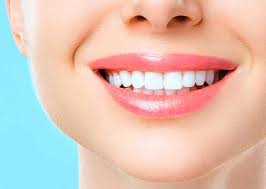
Smile designing, commonly referred to as a smile makeover or cosmetic dentistry, is a thorough method for enhancing one’s smile. It entails a number of dental procedures and techniques designed to improve the teeth’s, gums’, and overall facial harmony’s aesthetic qualities. The shape, colour, size, alignment, and symmetry of the teeth, as well as the surrounding gum tissues and facial features, are all taken into account while developing a smile. The objective is to produce a smile that is harmonic, natural-looking, and consistent with the person’s desired result

Complete Denture Fixed, Removable, Cast Partial Denture

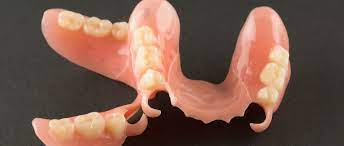
Different dental prostheses are used to replace missing teeth and regain oral function, including complete dentures, fixed dentures, detachable dentures, and cast partial dentures. Here is a quick description of each kind: The number of missing teeth, the health of the remaining teeth and oral tissues, the patient’s preferences, and financial constraints all have a role in the type of denture that is selected. To choose the best kind of denture for your particular circumstance, it’s vital to speak with a dentist or prosthodontist. Regardless of the type chosen, preserving the longevity and functionality of dentures requires proper care and regular dental exams. To ensure that you have the best dental health possible, your dentist will provide you instructions on how to wear, clean, and care for your dentures.

Cleft Lip & Palate

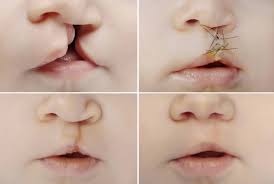
Birth deformities known as cleft lip and cleft palate happen when the lips and/or the palate do not fully develop during foetal development. They are some of the most prevalent craniofacial anomalies. A person’s health and wellbeing may be impacted in a number of different ways by cleft lip and palate. They may have an impact on facial attractiveness, speech development, dental health, hearing, and eating and swallowing. Due of the obvious differences, people with cleft lip and palate may also struggle socially and psychologically.

Implant Supported Prostheses

Dental prostheses that are attached to and supported by dental implants are referred to as implant-supported prostheses, implant-supported restorations, or implant-supported dentures. Dental implants are artificial tooth roots that are surgically inserted into the jawbone. They are composed of biocompatible materials, usually titanium. For the attachment of prosthetic teeth or restorations, they offer a sturdy basis. Single missing teeth, a group of missing teeth, or even an entire arch of missing teeth can all be replaced with implant-supported prosthetics. Compared to conventional detachable prostheses or dental bridges, they provide a number of benefits.

Laminates, Veneer, Crowns & Bridges

Dental restorations including veneers, crowns, bridges, and laminates are used to enhance the strength, function, and aesthetics of teeth. Here is a quick description of each. The exact dental requirements of the person will determine whether to use laminates, veneers, crowns, or bridges. When prescribing the best repair, the dentist will take into account aspects including the severity of the tooth damage, the desired aesthetic result, the patient’s dental health, and their financial situation.

Partial Denture

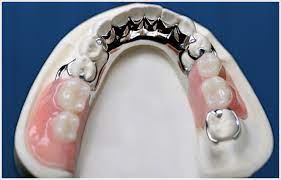
A partial denture is a dental prosthesis used to replace one or more missing teeth. It is often referred to as a removable partial denture or just a partial. Its goal is to improve the patient’s function, attractiveness, and chewing abilities. A metal or acrylic framework that supports false teeth makes up a partial denture. The framework is created specifically for the patient’s mouth and is made to resemble their actual teeth. Artificial teeth that closely mimic natural teeth in terms of colour and shape are affixed to the framework.

Maxillofacial Prostheses

Maxillofacial prostheses are synthetic devices used to replace or repair missing or damaged head and neck structures, particularly the face and jaws. They are specialised prosthetic devices created to enhance the appearance, functionality, and general well-being of people who have lost face structures as a result of trauma, congenital malformations, tumour removal surgery, or other medical disorders.

Restoration/Filling

A restoration, often known as a filling, is a dental procedure used to heal a chipped or decayed tooth by regaining its integrity, function, and shape. A dental filling is used to restore the tooth’s structure and stop future degeneration when a tooth has cavities, fractures, or other types of damage.

Scaling & Polishing

In order to clean and remove plaque, tartar (calculus), and surface stains from the teeth, dental hygienists or dentists frequently execute a treatment known as scaling and polishing, sometimes known as dental prophylaxis. It is crucial to maintaining proper oral hygiene and guarding against tooth decay and gum disease. Scaling and polishing are frequently done in conjunction with routine dental cleanings, which may also involve other preventive procedures like oral hygiene training, a gum health evaluation, and, if necessary, dental X-rays.

Treatment of Gum Disorder

The goal of treating gum diseases like gingivitis and periodontitis is to restore the health of the gums and stop the disease’s spread. Depending on how severe the gum problem is, a particular treatment strategy may combine expert dental care with regular at-home oral hygiene routines. Along with professional care, good oral hygiene habits at home are essential for controlling gum problems. This entails using an antimicrobial mouthwash as directed by the dentistflossing daily to eliminate plaque from in between the teeth and along the gumline, and brushing the teeth at least twice a day with a soft-bristled toothbrush.

Whitening of Teeth

Dentistry bleaching, sometimes referred to as teeth whitening, is a cosmetic dentistry technique used to whiten teeth and enhance their overall appearance. It is a well-liked solution for those who want to have a grin that is more brilliant and radiant.

Treatment of Fractured Jaw

The treatment of a fractured jaw, also known as a mandibular fracture, depends on the severity and location of the fracture. It typically involves a combination of non-surgical and surgical interventions to stabilize the fractured bones, promote healing, and restore normal jaw function. The treatment approach may vary based on the individual case and the recommendations of the treating oral and maxillofacial surgeon. Here are some common methods used in the treatment of a fractured jaw

Dental Treatment for Children

Paediatric dentistry, often known as paediatric dental care, focuses on giving newborns, young children, and teenagers comprehensive oral care. It entails a variety of preventive, diagnostic, and therapeutic techniques developed specifically for paediatric patients’ special needs. Here are a few typical paediatric dental procedures.

Wisdom Teeth Extraction

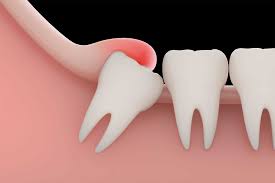
The last teeth to erupt in the mouth, the third molars, are frequently removed by a dental treatment known as wisdom teeth extraction, sometimes known as third molar extraction. However, not everyone develops these teeth, also known as wisdom teeth, which normally erupt between the ages of 17 and 25.